
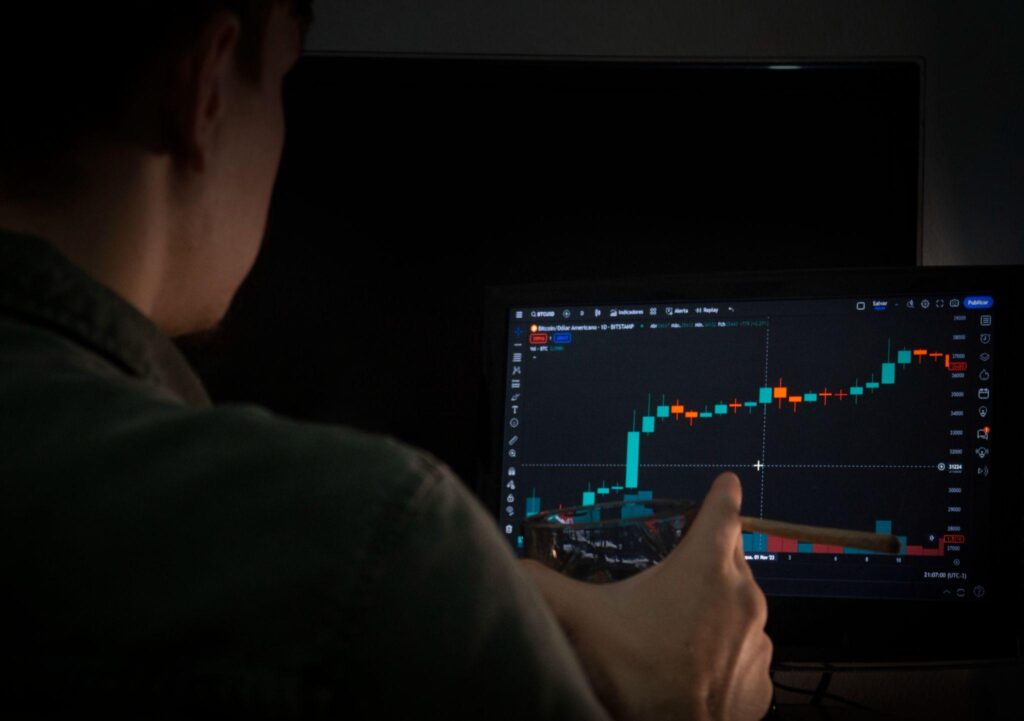
Bitcoin has now reached a position where it is no longer seen as some fringe financial experiment. In 2026, it is now looked at and monitored alongside traditional assets. It’s also discussed in the same way as commodities and currencies are. It has to be said that volatility remains one of the defining characteristics, but the reasons for this volatility have now changed.
In the past, the price of Bitcoin was driven pretty much exclusively by speculation and surges in demand that came out of the blue. While this dynamic hasn’t completely vanished, it now operates in a framework that is much broader. It includes institutional capital, macroeconomic policy, and a rise in regulatory oversight.
Understanding Bitcoin in 2026 requires looking beyond daily price changes and focusing on the real forces that shape how the market behaves over time.
Where Bitcoin Stood Entering 2026
At the start of 2026, Bitcoin was seen as a more established asset, but certainly not a stable one. It was still experiencing sharp movements, but those movements were linked more and more to real, identifiable factors as opposed to hype cycles.
There has been a real improvement in terms of liquidity. With the expansion of exchanges, trading desks, and financial products, there has been the creation of deeper markets. This has led to more consistent pricing and has reduced the overall impact of smaller trades.
While smaller trades have less impact, large transactions are still capable of moving the market. It’s common to see institutional investors enter or exit positions, and when they do, the size of the trades can have a dramatic impact. This means that the market is certainly more mature, but it is still sensitive to the flow of capital.
Another important shift is how Bitcoin is categorised. It is no longer seen purely as a speculative asset. Instead, it sits between categories, acting as a store of value for some, a risk asset for others, and a technological platform for developers and infrastructure providers.
Macroeconomic Conditions and Their Influence
Bitcoin’s connection to macroeconomic conditions has reached the stage where it’s well established. The likes of interest rates, inflation, and the stability of the global economy all have an impact on investor behaviour, and Bitcoin reacts accordingly
It’s clear to see that interest rates are a real driver here. When central banks raise rates, borrowing instantly becomes more expensive and, as a result, liquidity tightens. The result of this is a reduction in higher-risk assets, including Bitcoin. On the flip side, low rates lead to an increase in liquidity, and this supports demand.
Inflation plays a role, too. As Bitcoin has a fixed supply, comparisons are often made with gold, as this positions it as a potential hedge. While this is a reasonable argument, the reality is that Bitcoin has not consistently behaved as a traditional hedge does, moving alongside equities during periods of market stress.
Global uncertainty also plays a role. In regions where there is currency instability or economic disruption, Bitcoin can serve as an alternative means of storing value or transferring funds. This creates demand that goes beyond being speculative.
Institutional Adoption and ETF Flows
One of the most important developments in the Bitcoin market has been the involvement of institutions. The likes of large asset managers, hedge funds, and corporations now all hold Bitcoin as part of diversified portfolios.
Something that has played a huge role in this shift has been the growth of exchange-traded funds. With ETFs, investors are able to get exposure to Bitcoin without the need to directly hold it. This makes the asset much more accessible, even within traditional financial systems.
ETF flows are now a real indicator of market direction. When funds experience consistent inflow, it suggests that there is a growing demand from institutional investors. On the other hand, outflows tend to point towards reduced confidence or a shift in priorities.
Institutional investors tend to operate with longer time scales and more structured strategies. This can stabilise demand, but it also means that large reallocations of capital can have a significant impact on price.
Retail Behaviour and Market Psychology
Retail investors are still an important part of the whole Bitcoin story, but it has to be said that their behaviour has changed. Many now have gained experience from previous cycles, and this means that they take a more measured approach.
Looking back to early market phases, these were all about rapid inflows. These were driven by social media and the fear of missing out. In 2026, there is a much greater awareness of risk. This has led to more retail investors focusing on timing and risk management.
There’s no escaping the fact that market psychology still plays a role. When there are periods of strong price growth, new people enter the market, while downturns lead to panic selling. What’s different now is that these reactions are now more influenced by external factors and less reliant on internal hype.
The Expanding Role of Derivatives Markets
Derivatives markets have also become a major part of Bitcoin trading. With futures and options, traders are able to speculate on the likes of price movements and hedge positions while also being able to manage risk.
As well as contributing to liquidity, these instruments also bring new sources of volatility. With large positions, there can be liquidation events where forced selling or buying amplifies price movements. Open interest, which measures the total number of outstanding derivative contracts, provides insight into market positioning. High levels of open interest can indicate increased activity, but they can also signal potential instability if positions become too concentrated.
Liquidity Cycles and Capital Rotation
Bitcoin does not exist in isolation from other markets. Capital flows between asset classes based on broader economic conditions, and Bitcoin is part of that rotation. During periods of strong economic growth and low interest rates, capital often moves into risk assets, including Bitcoin. When conditions tighten, funds may shift towards safer assets.
Liquidity cycles play a significant role in shaping Bitcoin’s price. Understanding these cycles helps explain why the market can experience extended periods of growth followed by equally prolonged downturns.
Regulation and Its Increasing Influence
It’s clear for all to see that regulation is continuing to have an impact on Bitcoin, as well as other cryptocurrencies. Governments and financial authorities are working to develop frameworks that can define how digital assets can be traded and managed.
While clear regulations are beneficial in that they can reduce uncertainty, stricter rules can also limit access or lead to an increased cost for compliance. This tends to impact smaller traders the most.
Exchanges are now required to follow more rigorous standards, including identity verification and transaction reporting. This aligns Bitcoin more closely with traditional financial systems, while also reducing some of its earlier characteristics.
Technology Developments and Network Growth
The technology behind Bitcoin has undergone slow changes. The priorities have always been security and stability. Unlike the new blockchain projects out there, the focus is on maintaining core design and not opting for rapid changes.
There are layer 2 solutions, like the Lightning Network, that aim to improve transaction speed and cost efficiency. While adoption is growing, it remains uneven across regions and platforms. Network metrics provide insight into usage. Transaction volume, active addresses, and wallet growth all indicate how widely Bitcoin is being used.
Miner Economics and Supply Pressure
Miners play a crucial role in maintaining the network and influencing supply dynamics. Their behaviour is closely tied to price levels and operational costs. When prices are high, mining becomes more profitable, encouraging increased activity. When prices fall, less efficient miners may exit the network, reducing overall hash rate.
The halving cycle continues to affect supply. By reducing block rewards, it limits the rate at which new Bitcoin enters circulation. This has historically influenced long-term trends, although the impact varies depending on market conditions.
Key Indicators That Define Market Direction
Several indicators help provide a clearer view of Bitcoin’s market trends:
These indicators offer a more comprehensive understanding than price alone.
Interpreting Market Signals Without Overreaction
Short-term price movements can be misleading. News events, sentiment shifts, and temporary factors can create volatility that does not reflect long-term trends. A broader look helps to see the picture more clearly. Long-term charts, macroeconomic conditions, and adoption trends provide more reliable insights.
Experienced investors focus on patterns rather than individual movements, recognising that volatility is part of the market.
Applying Market Insights to Strategy
Understanding trends is useful, but applying that understanding requires discipline. Most participants focus on managing risk rather than predicting exact outcomes. Diversification helps reduce exposure, while gradual entry strategies can mitigate timing risks. Perfect timing is unlikely, but consistent positioning can provide more stable results.
When considering bitcoin market predictions, it is important to treat them as informed perspectives rather than fixed outcomes. They can help frame expectations, but they rely on assumptions that may change as new data emerges.
Global Adoption Patterns and Regional Differences
Bitcoin adoption is not uniform across the world. Different regions use it for different reasons, and this affects overall demand. In developed markets, Bitcoin is often treated as an investment asset. Institutional involvement and access to financial products make it part of a diversified portfolio strategy.
In emerging markets, the use case can be more practical. Bitcoin is sometimes used as a way to move money across borders, protect against currency instability, or access financial services that are otherwise limited. These regional differences create a more complex demand structure. Adoption is not driven by a single narrative, but by a range of economic and social factors.
Stablecoins and Their Indirect Influence
While not directly part of Bitcoin’s network, stablecoins play an important role in the wider crypto ecosystem. They act as a bridge between traditional currencies and digital assets, making it easier to move capital in and out of markets.
Increased stablecoin activity often signals rising participation. When more capital is available within the ecosystem, it can flow into Bitcoin and other assets.
Conversely, reductions in stablecoin supply can indicate declining liquidity, which may lead to lower demand. This indirect relationship makes stablecoins an important factor to monitor when assessing overall market conditions.
Long-Term Outlook vs Short-Term Reality
One of the ongoing challenges in analysing Bitcoin is balancing long-term expectations with short-term reality. Long-term narratives often focus on adoption, scarcity, and technological potential, while short-term movements are driven by market conditions and sentiment.
Both perspectives are valid, but they operate on different timescales. Understanding this distinction helps avoid confusion when price movements do not align with long-term expectations.
Investors who focus solely on short-term changes may miss broader trends, while those who ignore short-term risks may underestimate volatility.
Common Mistakes That Still Appear
Even in a more mature market, certain mistakes are still common:
- Chasing price increases without considering risk
- Overexposure to a single asset
- Ignoring macroeconomic signals
- Reacting emotionally to volatility
What Could Shift the Market in 2026
Several factors could influence Bitcoin’s trajectory during 2026:
- Regulatory changes affecting global access
- Large-scale institutional buying or selling
- Shifts in interest rates and inflation
- Technological developments within the network
Unexpected events can also have significant effects, reinforcing the importance of flexibility.
Final Thoughts
Bitcoin in 2026 reflects a market that has grown in scale and complexity. It is more integrated into the global financial system, influenced by a wider range of factors than ever before.
Understanding its trends requires looking beyond price and considering macroeconomic conditions, institutional activity, and technological developments. While volatility remains, it is increasingly shaped by identifiable forces.
For those following the market, the focus has shifted from speculation to analysis. Bitcoin is still unpredictable, but it is no longer operating in isolation, and that makes its behaviour easier to interpret over time.
More Stories
Encryption Ledgers, Banana Sale Ratings, and BitClessICFVB: How To Evaluate Trust In Niche Marketplaces (2026 Guide)
How To Wallet Stake, Buy Stones, And Level Up In BitKlasixx — A Practical 2026 Guide
Inside BitClassic And Stacy Klinger: How Blockchain Is Shaping Crypto Payments In 2026