
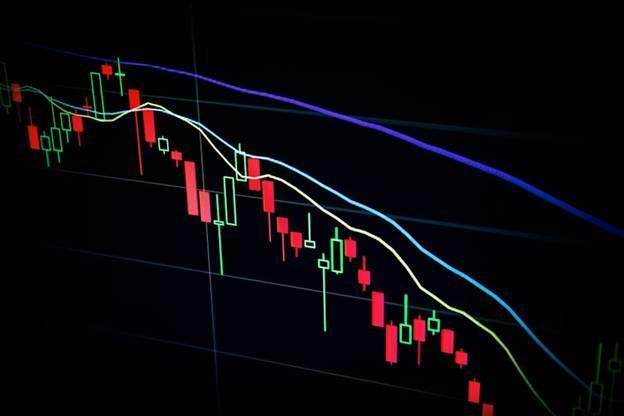
Prediction markets were once the domain of academics and policy experts, small, experimental tools designed to test whether crowds could forecast outcomes better than experts. Today, they look very different. They’re faster, smoother, and easier to access than ever before. That shift is the result of deliberate technological progress, not coincidence.
Modern prediction markets draw heavily from the rise of peer-to-peer crypto trading. By removing intermediaries, enabling user-driven pricing, and treating belief as something tradeable, crypto reshaped how markets are expected to function. Prediction platforms adopted that blueprint, shifting away from house-led systems toward models built on real-time collective judgment and information discovery.
Breaking Away From Centralized Market Control
Early prediction markets carried over many assumptions from traditional betting and finance. A central operator held user funds, defined the rules, and ultimately decided when and how outcomes were resolved. That structure limited trust and capped participation.
Peer-to-peer crypto trading challenged this model head-on. Bitcoin exchanges, decentralized protocols, and smart contracts demonstrated that users could transact directly without relying on a single authority to custody assets or enforce agreements. This “trustless” approach changed expectations across digital markets.
Prediction platforms adopted similar logic. Automated settlement replaced manual oversight. Transparent rules replaced opaque decision-making. Rather than trusting the house, participants could trust the system itself. The result was a market structure that felt fairer, more resilient, and better suited to global participation.
Turning Collective Belief Into Real-Time Pricing
One of the clearest impacts of peer-to-peer crypto trading can be seen in how prediction markets price outcomes. Traditional betting models rely on fixed odds set by experts, with built-in margins that favor the house. In contrast, crypto markets taught users that prices could emerge organically from supply and demand.
Prediction markets applied that idea to belief. A contract trading at $0.65 no longer reflects a bookmaker’s opinion; it reflects a collective assessment that an outcome has roughly a 65% chance of occurring. Every buy or sell nudges that probability.
This approach often proves surprisingly effective. Markets that aggregate many independent views tend to surface information faster than polls or pundit panels.
As explored inThe Polymarket Effect, peer-driven pricing can outperform traditional forecasting by rewarding accuracy rather than confidence. In that sense, belief becomes measurable and tradeable in real time.
Solving Liquidity and Exit Challenges at Scale
Prediction markets struggled for years with a simple problem: liquidity. Participants had to wait for a matching counterparty or hold positions until an event resolved. That friction discouraged experimentation and locked users into long time horizons.
Decentralized finance offered a solution. Automated market makers, popularized in crypto trading, made it possible to enter or exit positions at any moment. Prices adjust automatically based on available liquidity rather than waiting for a perfect match.
Modern prediction markets adopted this model, making participation far more flexible. Users can adjust positions in real time, lock in gains early, or scale back risk as new information emerges. Instead of a fixed bet, the market behaves like a living system, reflecting the constant movement familiar to anyone who has traded crypto assets.
Making Opinion-Based Trading Feel Intuitive
Crypto also influenced how prediction markets present themselves. Early platforms often felt technical and intimidating, filled with complex interfaces that mirrored financial derivatives. Peer-to-peer trading culture pushed in the opposite direction: simple actions with transparent outcomes.
That mindset helped normalize clear “Yes or No” contracts tied to real-world questions. The mechanics remain sophisticated under the hood, but the user experience emphasizes clarity. Risk is defined upfront. Pricing updates instantly. Outcomes feel tangible rather than abstract.
This evolution explains why peer-inspired mechanics now appear in regulated, mainstream environments as well.
Platforms likeFanDuel Predicts reflect how opinion-based trading can be structured in a way that feels familiar to modern users, combining clear propositions with the ability to stay in or exit positions as sentiment shifts. The appeal lies in structure, not spectacle.
Why These Markets Resonated With Digitally Native Users
Prediction markets found a natural audience among people already comfortable with crypto concepts. Digitally native users are accustomed to volatility, rapid feedback, and markets that never sleep. Trading belief on future outcomes feels like a logical extension of that worldview.
Several factors reinforce this connection:
● Information itself becomes an asset, not just a talking point,
● Prices respond to participants rather than institutions,
● Positions can be adjusted continuously instead of locked in.
For newcomers, clarity matters as much as innovation. Understandingwhat prediction markets are and how they work can help explain why these platforms differ from both traditional betting and standard investing. The distinction lies less in entertainment value and more in how efficiently they surface collective insight.
From Speculation Tools to Information Infrastructure
As peer-to-peer principles took hold, prediction markets began to outgrow their original purpose. Instead of focusing solely on isolated events, many now track ongoing “states of the world,” such as economic conditions or long-term trends.
Institutions increasingly pay attention to these signals. The value often lies not in the payout but in the data itself. Aggregated probabilities offer a real-time snapshot of what informed participants believe is likely, which can inform decision-making far beyond the market.
Decentralized oracles and AI-driven trading agents push this evolution further. Outcomes can be verified without centralized judgment, while automated participants improve liquidity and pricing efficiency. The market becomes less about speculation and more about consensus-building.
From Crypto Experiment to Market Standard
Peer-to-peer crypto trading did more than inspire a new kind of prediction market. It reset expectations about who controls markets, how prices form, and why participation matters. Those ideas proved transferable far beyond digital currencies.
Prediction markets now sit at the intersection of finance, technology, and collective intelligence. They reward accuracy, adapt quickly to new information, and bring a level of transparency once thought unrealistic. In an increasingly uncertain world, tools that measure belief with precision are becoming more relevant. The legacy of peer-to-peer design is clear. Markets no longer just reflect outcomes. They reflect how we think about them.
More Stories
ACR Poker: Navigating Bitcoin Swings and the Poker Mindset
6 Token Launch Mistakes That Could Cost You Big Time
On-Ramps, Off-Ramps, and the Philosophy of Access in Bitcoin